The Question Every Serious Buyer Eventually Asks before you sign anything, before you walk through a show flat, before you compare floor plates and price per square foot there is one question that cuts through all the noise:
Who is building this, and can I trust them with something this important?
In Indian real estate, that question rarely has a satisfying answer. Developers appear, raise capital, deliver (or don’t), and disappear. Brand names dissolve between projects. Legacies are rented, not earned.
Alembic is different. Not because it says so but because Vadodara itself is the proof.
1907: A Factory, a Family, and a City That Didn’t Exist Yet
The story begins not with a blueprint but with a bet.
In 1907, the Lalbhai family established Alembic Chemical Works on the outskirts of what was then a modest princely-state town. They chose a stretch of land along what would eventually become Alembic Road at the time, little more than the edge of the city.
The plant produced pharmaceuticals at a time when most medicines in India were imported. It was an act of industrial ambition, manufacturing a product that required precision, consistency, and trust qualities that would come to define everything Alembic touched across the next 118 years.
What is remarkable in hindsight is the geography. Alembic didn’t move into Vadodara the way most businesses enter a city opportunistically, following growth. Alembic preceded the growth. The factory came first. The neighbourhood grew around it. The roads, the workers’ housing, the schools and hospitals that the group would later build they didn’t find a city. They helped create one.
That is the foundational truth of the Alembic story: most developers build on borrowed land and borrowed credibility. Alembic literally built the city it now lives in.
Four Generations, Four Reinventions
What separates a business that lasts 118 years from one that doesn’t is not luck. It is the willingness generation after generation to read the moment honestly and adapt.
The First Generation: Pharmaceuticals and the Founding Instinct (1907–1940s)
The original Alembic was a pharmaceuticals business, and a pioneering one. At a time when India’s industrial capacity was constrained by colonial policy, Alembic manufactured medicines domestically. It required technical expertise, regulatory foresight, and a patient capital mindset the understanding that building something real takes decades, not quarters.
This era established Alembic’s reputation for quality. Not quality as a marketing claim. Quality as an operational standard that, once established, became non-negotiable. The pharmaceutical legacy lives on today in Alembic Pharmaceuticals Limited, one of India’s most respected listed pharma companies with a market capitalisation exceeding 3.21 billion USD.
The Second Generation: Glassware, Engineering, and Industrial Scale (1940s–1970s)
The second chapter brought diversification. Recognising that India’s industrialisation would require materials and infrastructure not just medicines Alembic expanded into glassware manufacturing and engineering. The group built manufacturing capacity at a time when domestic industrial supply chains barely existed.
This wasn’t diversification for its own sake. Each new business was adjacent to something Alembic already understood: precision, production at scale, and the long view. A glassware plant isn’t so different from a pharma plant in terms of what it demands from its operators. The same discipline applied.
Through this era, Alembic deepened its roots in Vadodara. The group’s footprint grew more land, more workers, more infrastructure and with it, a sense of civic responsibility that would shape how the family approached everything that followed.
The Third Generation: Chemicals, Expansion, and the CSR Mandate (1970s–2000s)
The third generation oversaw Alembic’s expansion into specialty chemicals while also formalising what had always been an informal truth: the group’s obligation to the community it helped build.
CSR at Alembic predates the legislation that made it mandatory. Schools, hospitals, and support programs for the underprivileged were not calculated brand investments they were expressions of a long-standing belief that business and community are inseparable. A company that employs 16,000+ people across its group entities does not exist in a vacuum. It shapes the communities it operates in, and bears responsibility for them.
This generation also managed the group through some of India’s most turbulent economic periods liberalisation, structural reforms, new competition and emerged with its reputation intact.
The Fourth Generation: Real Estate and the Next 100 Years (2009–present)
In 2009, Alembic Real Estate was founded. The logic was straightforward but profound: after a century of industrial activity, the group held large landbanks in prime locations across Vadodara land that had appreciated alongside the city it had helped grow. The question was what to do with it.
The answer was not to sell it. The answer was to build on it but to build differently.
2009: When a Legacy Becomes a Mixed used Development
Alembic Real Estate’s founding brief was ambitious: create integrated developments that don’t just deliver housing units, but build genuine communities. The inspiration was nature itself the way ecosystems create connections, support diversity, and sustain themselves over generations.
The five pillars of Alembic City’s philosophy Community, Health, Environment, Evolution, and Service aren’t taglines. They are the distillation of 118 years of institutional learning about what makes a place worth living in.
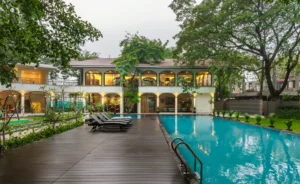
This philosophy shaped every decision that followed: where buildings were placed, how much land was given to green space, which amenities came first, how retail and workspace and residence were interwoven.
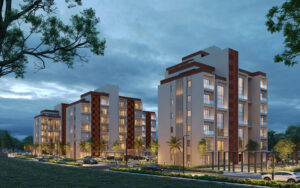
The result, across more than 5 million square feet of built-up area and over 1,800 homes delivered to families, is Alembic City Vadodara’s most coherent, trusted, and ambitious urban development.
What Alembic City Is Today
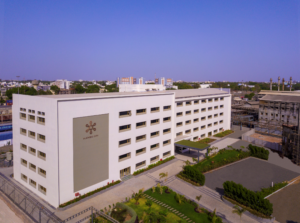
Alembic City Vadodara spans more than 100 acres in Gorwa, Vadodara on the same Alembic Road where the original factory stood in 1907. The master plan is an integrated mixed use development where residential, commercial, and lifestyle uses are not stacked on top of each other but woven together.
Why 118 Years Matters More Than Ever
India’s real estate market in 2026 is maturing fast. Buyers especially those investing in premium and luxury segments are increasingly sophisticated. They have seen enough broken promises to know that a beautiful render is not a track record.
In this environment, legacy is not sentiment. It is a signal.
When you buy into Alembic City whether a luxurious apartment in Vadodara, a 4 BHK duplex, or lease a commercial property you are buying into 118 years of institutional commitment to quality, community, and the long view.
The land is Alembic’s own. The credibility is earned, not borrowed. The city that grew around their first factory in 1907 is the same city in which they are now building its most ambitious residential and commercial future.
That is a rare thing. And in real estate where so much else is uncertain rarity of that kind is worth paying attention to.